Care Advice
Advice you can count on.
Click on the links to discover more about each service.

Oral Health
The Right Brush
Must have soft bristles for effective cleaning without trauma or recession of gums or abrasion of teeth.
Handle & size of head should correspond to person's hands, size of mouth, and dexterity level. Electric toothbrushes are great – efficient, effective, and a fun way to brush, especially for younger children and the elderly. Also, don't forget to brush your tongue!
Remember: spend 2-3 minutes on a slow rotating motion to benefit your teeth not harm them.
Sensitive vs. Tartar Control Toothpastes
If your teeth are sensitive to hot or cold foods, or even to light touch or brushing because of receeded gums and exposed tooth surfaces, we can recommend a variety of sensitive toothpaste. Generally you should avoid tartar control pastes as they tend to cause more sensitivity.
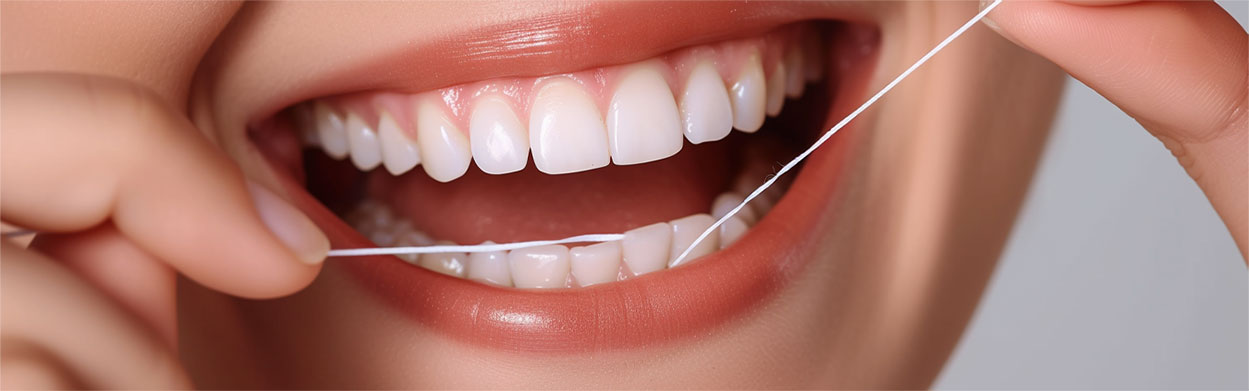
Mouthrinse?
Rinsing helps remove debris from the mouth. Removing this debris will freshen breath, help to reduce plaque (a thin film of bacteria that forms on teeth) to prevent or reduce gingivitis, tooth decay, and reduces the speed that tartar forms on teeth. Mouth rinses can be used before or after brushing, but it is not a substitute for brushing or flossing.
Regular Checkups
A regular checkup includes a thorough examination with or without radiographs. Most people cannot feel small cavities, oral lesions, or periodontal disease until it's too advanced to try to restore or salvage. A dentist is trained to see even the smallest lesions and can recommend preventive care.
Dispelling Dental Myths
As the general public gets older, it's also time we got a little wiser. Wiser about our dental health of course. It's time to take a look at the old myths about the aging process on our teeth and see if there really is some “food for thought”.
Myth #1 “I'm nearly sixty years old, I can't possibly get any more cavities.”
FALSE! Anyone can get cavities as long as they have even one tooth in their mouth! Proper oral hygiene and regular check-ups are as vital at ninety-nine as it was at age one.
Myth #2 “Loose teeth are just a regular part of growing old.”
FALSE! The loosening of teeth is part of gum disease, a slow low-grade constant infection in the gums that destroy the underlying bone. Bone is the foundation for the teeth, and the more bone there is surrounding teeth, the stronger and less mobile the teeth are. Although aging does account for small amounts of bone loss over the years, gum disease occurs when plaque and tartar are not cleaned from the teeth and gums. Again, only proper oral hygiene and regular check-ups will keep gum disease in check.

Myth #3 “I wear dentures so I don'’'t need to see a dentist.”
FALSE! Dentists are trained at looking at the mouth and the surrounding tissues not just teeth! Ill-fitting dentures can cause constant sores in the mouth, improper chewing/digestion, not to mention embarrassment! A dentist can check for any signs of oral pathology, adjust or reline existing dentures, and/or if needed make new dentures or suggestions on how to close spaces caused by missing teeth.
Myth #4 “I’m too old to care about the appearance of my teeth. Probably nothing can be done anyway.”
FALSE! Older adults are living much more vital and exciting lives than ever before! So why should you settle for a less-than-happy smile line? Most dental options are available to the elderly including implants, bridgework, cosmetic dentistry, and even braces. Just ask your dentist about these various options and bring back your youthful smile.
Myths about our oral health are misleading as well as potentially harmful. Proper dental home care as well as a professional recall program, will help you keep your teeth for a lifetime.
Remember to never retire your smile.
Taking Care of Dental Work
Many people think that you cannot get cavities under a filling, crown or bridge. The tooth has already been “fixed”, so no more worries, right? Absolutely not true! Teeth are under those crowns and bridges, and as long as teeth are in the oral environment – it can decay. Taking care of expensive dental work will prevent early failures due to cavities and/or gum disease.
Crown and Bridge Care Advice:
Crowns should be brushed and flossed more meticulously than regular teeth because they collect plaque and tartar greater and faster than regular teeth.
For bridges, it is especially important to brush and floss the teeth that “support” the bridge. Floss threaders help slip the floss under the bridge to clean the underside of the bridge and the sides of the teeth. Interproximal brushes are small brushes that can be used under the bridge and between the roots of the supporting teeth.
See your dentist immediately if you feel one or more sides of the bridge or the crown “loosening”. A loose crown or bridge can lead to extensive decay of one or more of the supporting teeth and ultimately the loss of the teeth.

Implant Care:
Implants are imbedded into the jaw bone to act as roots of teeth. Implants can be a single unit or multiple units as when supporting fixed bridges or removable dentures.
If surrounded by natural teeth, a single implant would be brushed and flossed along with the natural teeth. When two or more implants are fixed to a bridge - use the floss threads and interproximal brushes with warm water to clean all around the heads of the implant and under the bridge.
For implants supporting a removable denture - again use the smaller interproximal brushes gently all around the exposed parts of the implant. NEVER use any metal brushes or metal picks on the implant since this will damage the smooth outer surface of the implant making it more susceptible to plaque and tartar build-up.
Partial Denture Care Advice:
Remove the dentures at least twice a day to thoroughly brush and floss remaining teeth. Rinse the denture under warm water and gently scrub using a denture brush or a soft brush with soap and water. Plaque and tartar can build up on false teeth, just like they do on natural teeth. Soak them overnight in water, or in a special cleanser, but avoid using vinegar as they will damage the metal components of the partial denture.
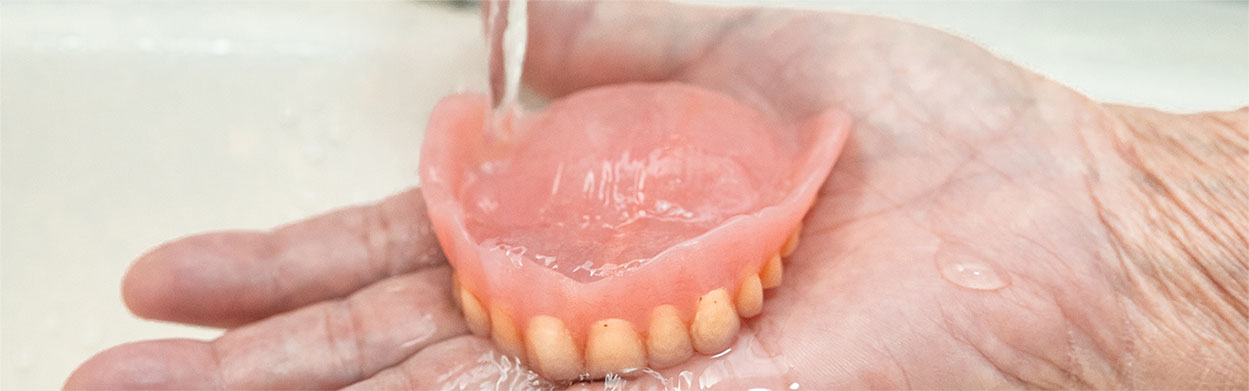
Full Denture Care Advice:
It is especially important in the full denture mouth to remove them while you sleep since the amount of the height and depth of gummy/bony ridges determines how well the denture is going to fit. These ridges need the time overnight to rejuvenate. Without this time, ridges lose their height faster and dentures become loose and sore faster.
Dentures should be cleaned EVERY DAY using a denture brush or a soft brush with soap, and warm water. Do not scrub, as this causes scratches and allows bacteria to harbour in the scratches. A denture cleanser can be used to soak them overnight, as well as a mixture of half water and half vinegar. DO NOT use bleach as this will whiten the pink acrylic parts of the denture.
Preventative Dentistry
An ounce of Prevention is worth its weight in gold
The new millennium is all about preventing problems before they arise. People are more aware of the risk factors for heart disease, stroke, breast cancer, etc., and are changing their lifestyles to moderate these risks.
Are you aware of the risk factors of dental diseases? How about preventing them? The modifications are easy and as importantly, easy on the bankbooks.
Count the cost of routine checkups
Most patients require check-ups and cleaning twice a year. For an adult, the average cost per visit is approximately $150-200 (a little more if radiographs need to be taken.) Routine check-ups watch for early signs of gum disease, small cavities, oral cancers, and other potential problems.
The most common reason why people don't schedule regular check-ups is because they don't have any pain or any problems. They will go when it hurts. The truth is, if it hurts, it's usually too late.
Most people are not sensitive to cavities, gum disease, or any other oral pathology until it is too far gone. Cavities, for example, may cause a slight sensitivity to hot or cold or sweet foods that is almost unnoticeable on a day to day basis, but can suddenly abscess to a throbbing pain.
Compare the cost of a filling a cavity (ranges from $100-300, depending on the size of the cavity) verses an abscessed tooth that will require root canal therapy, a filling, and/or a crown to replace lost tooth structure ($ 1500-2000.00) or losing the tooth altogether (priceless).
Not Just a Cleaning
Most people don't connect their mouths to the rest of their bodies, but the truth is, your mouth is the gateway to your body. The link between oral infections and other diseases in the body such as heart disease and diabetes is becoming well documented and accepted within the health care community.
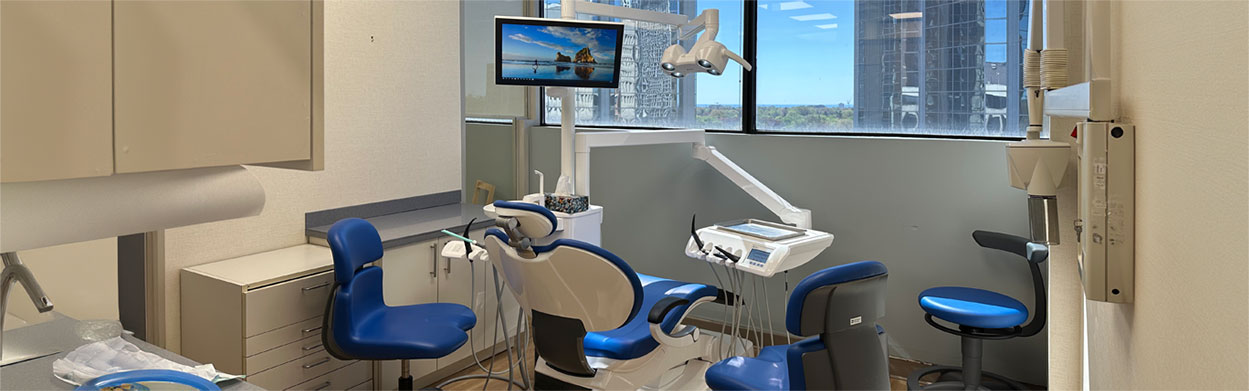
Our dental hygienists are committed to providing you with clear information and clinical services to help you maintain your good physical health as well as oral health. As members of our dental health care team, our dental hygienists have a distinctive clinical and educational role to play in promoting good oral health for a lifetime.
Our dental hygienists are not just teeth cleaners - they also assess, plan and implement treatments, and evaluate your individual oral care needs. By tracking changes in your gums, it enables the hygienist to assess the health of your oral environment and plan a course of treatment that will help you to prevent disease that may affect your physical well-being.
When is it a Dental Emergency?
An ounce of Prevention is worth its weight in gold
Many of our patients have similar questions and concerns. We are often asked questions about when a patient should call the dentist. What is a true dental emergency and what is considered a non-emergency. This chart should help you to determine whether or not you or your family members are experiencing a dental emergency. At our office, we always reserve time in our schedule to ensure that your needs are attended to in a prompt, efficient and caring manner.
Keep this chart in a handy location to refer if you are experiencing any of the symptoms listed below. If you are experiencing any discomfort or difficulty with function, always feel free to call our office to ask any questions. Our team will be happy to help.
| Symption | Is It An Emergency? | What Action Should I Take? |
|---|---|---|
| Dull, continuous ache | Non-emergency | Schedule an appointment at your earliest convenience. |
|
Sudden, severe discomfort,
accompanied by swelling |
It could be an emergency | Apply a cold compress and see your dentist immediately. |
| Abscessed tooth | Emergency | An abscess is a localised pus formation usually located at the root end of the tooth. If the condition is acute and there is infection present the dentist will likely prescribe antibiotics and analgesics before attempting to perform root canal therapy. |
| Knocked out tooth | Emergency | Control the bleeding by applying direct pressure with a cold compress. Do not remove or be alarmed, as there may be extensive bleeding. Transport the tooth wrapped in a wet cloth or a glass of milk. Do not rinse the tooth. |
| Broken tooth | Emergency | Depending on the severity of the fracture it could cause an infection which is much more difficult to treat. |
| Extruded Tooth | Emergency | Don’t try to force the tooth back into its socket. Gently reposition the tooth to its normal alignment. Hold the tooth in place with gauze or a tissue. You must see your dentist immediately. |
| Facial fracture | Emergency | Make sure the airway is open and transport the victim to medical aid as soon as possible, either a hospital emergency room or call 911. |
| Sensitivity to cold | Non-Emergency | Your tooth could be sensitive for a number of reasons. Never apply aspirin or heat to the tooth. Call the dentist and arrange an appointment as soon as possible. |
| Sensitivity to heat | Urgency | Sensitivity to heat can indicate that infection is present. See your dentist as soon as possible. If swelling and/or fever are present, consider it to be an emergency. An abscess could be forming. |
| Broken Braces and Wires | Urgency | If the broken appliance can be removed easily, take it out carefully. If not, cover the sharp or protruding portion with gauze, cotton balls or even chewing gum. Do not remove this and see your dentist immediately. |